From a faith perspective, pilgrims have the opportunity to affirm their belief in the Buddha as their guide. This faith will help pilgrims appreciate the sacred values of Buddhist lands and Buddhist sites in general.
From a spiritual perspective, after the pilgrimage, many visitors experience changes in their thinking and behavior, leading to a more virtuous life, a deeper understanding of the meaning and value of life; thus, living more profoundly for themselves, their loved ones, and society..
_0322.jpg)
The time spent visiting Buddhist sites is the most effective opportunity to experience spiritual life through meditation, chanting, worship, and walking meditation. Accordingly, consciousness is transformed, morality is elevated; peace and happiness are present.
- Which countries do Buddhist pilgrimage tours abroad usually visit? (Van Cong Hoang, Ho Huynh Phi, Mai Son - Ho Chi Minh City; Nguyen Ngoc - Vung Tau; nguyenhung@....)
- I would like to divide them into 3 groups: (1) Visiting Buddhist sites in India and Nepal; (2) Visiting the four great Buddhist mountains in China and Buddhist holy sites in Tibet; (3) Visiting Buddhist holy sites in other countries. Of these, group 1 is considered the most important because its sacredness is linked to the missionary footsteps of Buddha Shakyamuni, the founder of Buddhism, unlike other forms of Buddhist belief.
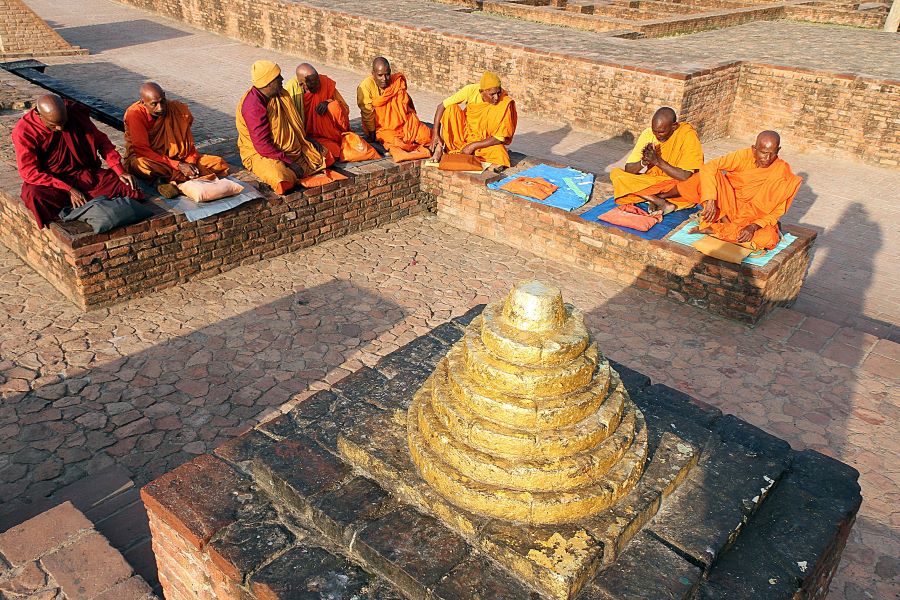
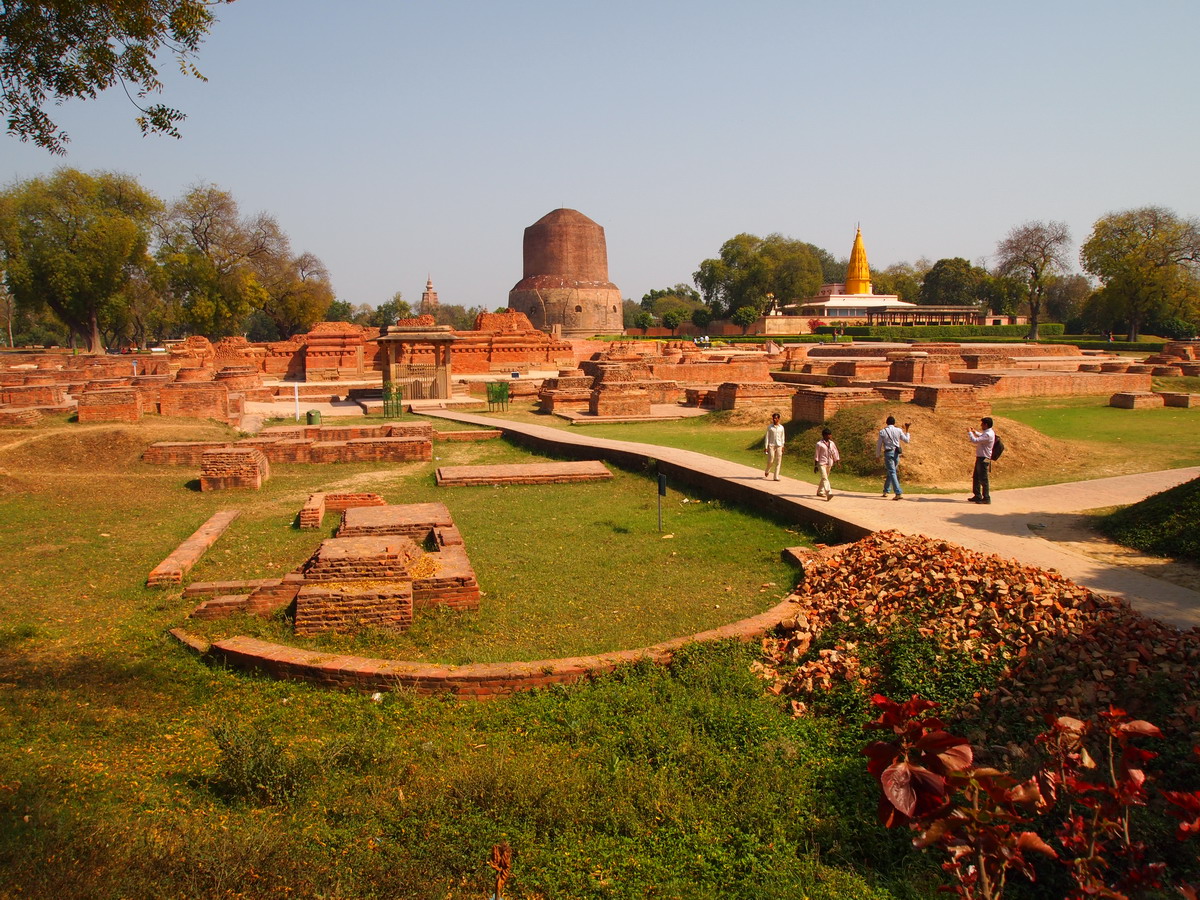
Buddhist pilgrimage tours (Group 1) currently only cover two major states in India: Bihar (Bodh Gaya – where the Buddha attained enlightenment; Vulture Peak – where the Buddha preached Mahayana scriptures) and Uttar Pradesh (Sarnath – where the Buddha turned the Wheel of Dharma; Savatthi – where the Buddha spent 24 rainy seasons; Vaishali – where the Buddha converted 500 nuns; and Kusinaga – where the entered Buddha Parinirvana). However, whether the full potential of the tour program can be realized remains a challenge for tour organizers.
For Group 2 pilgrimage tours, visitors will have the opportunity to see and experience firsthand the solemn scenery of the four great Buddhist mountains, as well as the mystical Potala Palace of Tibetan Buddhism. The number of organized tours to the four great Buddhist mountains is decreasing because the tour prices are usually higher than those to other Buddhist sites, and tourists need to spend 2 to 3 weeks there. Meanwhile, tours to Tibet are experiencing very little growth due to the harsh weather conditions in this icy land.
Other Buddhist scenic tours are only being developed in Thailand and recently in Myanmar, Taiwan, Nepal, Laos, Cambodia, and other countries.
- Besides pilgrimages to Buddhist temples and sacred sites, can pilgrimage tours also meet the relaxation needs of tourists? (Ngoc Son - Da Lat; The Dung, Ho Huynh Phi - Ho Chi Minh City)
- Currently, there are many attractive destinations that have not yet been explored by pilgrimage tour organizers, such as Dharamsala, where the Dalai Lama once resided and where Tibetan people still live; And South India includes the Sanchi Tower, the Allora and Ajanta Buddhist cave complexes, as well as several Buddhist caves at Elephanta, Bombay, with unique architectural structures inside the mountains unlike anywhere else on the planet.
I believe that if tour operators invest in the aforementioned pilgrimage tours, the content of Buddhist pilgrimages will be more comprehensive, reflecting the vitality of Buddhism in the medieval and modern periods, alongside the Buddhist sites usually associated with antiquity. However, to develop the potential of spiritual tourism, tour organizers must ensure both quality and satisfaction for pilgrims, in the truest sense of the word.
- I know many people participate in domestic pilgrimages at very low costs, with poor facilities and amenities (even food and accommodation in the temples), yet everyone is very satisfied and happy with those trips. According to Mr. Nguyen Trung Toan, Director of Zenflower Tourism & Services Company, pilgrimage tourism must also ensure the material needs and living amenities of tourists. I agree, but clearly this would make the tour price higher than the financial capabilities of many people who want to go on pilgrimages. How can we reconcile these two contradictory things? (The Dung - Ho Chi Minh City)
- It's strange that many people of advanced age, who are not healthy in normal times, remain unaffected throughout their pilgrimage journeys with unwavering faith. If pilgrims didn't have that strength, tour operators would probably face many complaints.
Pilgrims visiting Buddhist sites in India often don't worry much about transportation difficulties, harsh weather, environmental pollution, rampant begging, and a lack of information. That's the reality, but of course, tour organizers need to constantly improve their organization to ensure a comfortable experience for tourists, in addition to calculating appropriate tour prices.
- Some people who have returned from India say that the roads and tourism development in these countries are still very poor. Could you please clarify this? (Van Cong Hoang, Mai Son - Ho Chi Minh City; Le Trong - Nha Trang; nguynhung@.....)
- In reality, the biggest concern is that the transportation system at Buddhist sites is not as convenient as that of typical eco-tourism destinations both domestically and internationally. Some routes, less than 250km long, take up to 9 hours to drive, when ideally it shouldn't exceed 4 hours. Most of the roads leading to Buddhist sites are narrow, potholed, dusty, and lack public restrooms. These pose significant difficulties for international tourists.
Furthermore, at most Buddhist sites, tourists must purchase entrance tickets. The ticket offices at these sites do not provide pilgrims with any useful information about the sites. There are also no audiovisual resources to help them understand the sites in depth and detail, including their history, culture, architecture, and the Buddhist teachings associated with them. This makes pilgrimage tours entirely dependent on guides, and not all guides are competent in this regard.
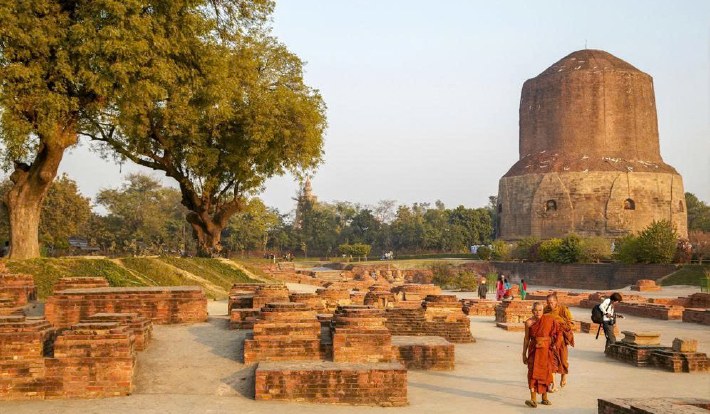
In November 2004, the Indian government organized a global spiritual tourism conference in Bodh Gaya and New Delhi to encourage world Buddhist leaders to pay more attention to Buddhist relics, thereby encouraging Buddhist followers to undertake pilgrimages to their roots. However, six years after the policy was implemented, it seems that the issue has not received adequate attention, especially regarding the improvement of pilgrimage routes.
- When visiting Buddhist relics, tourists often cannot remember the information provided by the tour guides because it is too long, especially the place names and the names of the figures, which are very difficult to remember. No one brings pen and paper to take notes, so when we return, we forget everything. When we ask our fellow travelers, no one remembers anything either. Luckily, we took quite a few pictures. Do tour companies have ways to make the explanations more concise and easier for tourists to remember? (Hoang Ngoc Minh - Ho Chi Minh City)
- In my opinion, there are two ways to overcome the difficulties and limitations mentioned above. One option is for tour operators to provide Buddhist pilgrimage guides to tourists; another is to hire experts. Currently, Vietnam has published nearly 10 works on Buddhist sites, including books and videos. Tour operators only need to purchase and give tourists a guidebook for reference before visiting the pilgrimage site.
For the second option, if a pilgrimage group includes many monks and nuns, tour operators can invite a monk or nun who has graduated or is currently studying in India to act as a guide or interpreter for the group. Recently, I have heard many Buddhists in pilgrimage groups organized by companies say that they often fail to meet the requirements for explanations and sermons at Buddhist sites, leading to visitors becoming bored with the ruins.