A pilgrimage to India is a golden opportunity for Buddhists to learn about the Buddha's practice, enlightenment, and missionary work. It's also a chance to relieve stress and heal the soul. Join us as we explore the journey of pilgrimage to the Buddhist land of India in the article below.
I. An Overview of Pilgrimage Tourism in India
1. What is pilgrimage tourism?
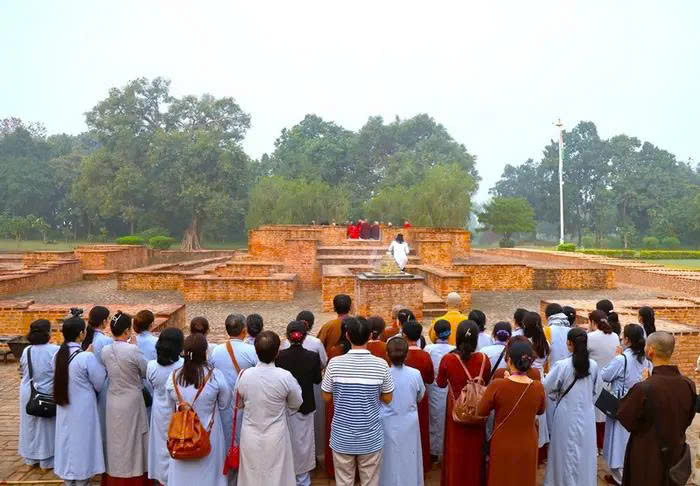
What is a pilgrimage? In Buddhism, a pilgrimage is a ritual involving lighting incense and then circumambulating the Buddha shrine and stupa. It can also simply mean lighting incense to pay respects before statues of Bodhisattvas and Buddhas. Later, the meaning of the word "pilgrimage" expanded considerably; people even used it to refer to cultural tourism, especially trips to historical sites and religious landmarks.
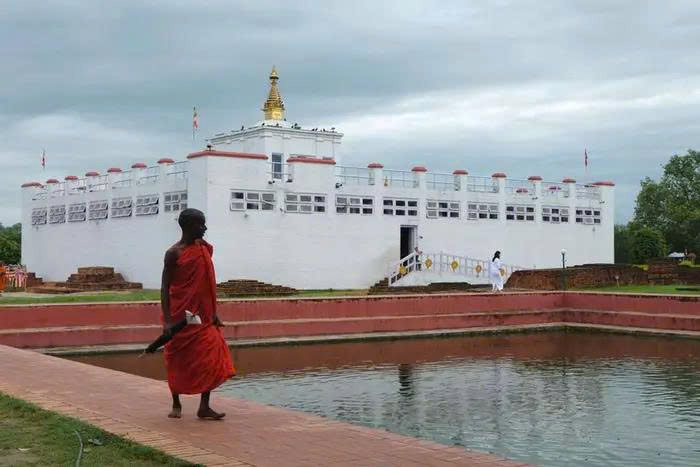
Indian pilgrimage tourism is a type of religious and spiritual tourism. In this type of tourism, pilgrims undertake a journey not simply to visit religious sites and artifacts, but for religious or spiritual purposes, aiming to achieve certain values in their religious practice. This is considered a type of tourism that offers people moments of peace and allows them to let go of worries and anxieties.
2. The significance of pilgrimage tourism
Pilgrimage tourism holds immense significance. For each individual, it's an opportunity to "uplift" themselves, to experience spiritual life and contemplate the unique culture of Buddhism, thereby helping them to understand themselves, cultivate faith, and enrich their cultural knowledge, making life more meaningful.
Through pilgrimages, people seek to relieve stress and pressure in their lives. At the same time, pilgrims want to pay respects, offer prayers, and purify themselves, "healing" their souls and minds.
Furthermore, pilgrimage tours always leave unforgettable emotions, memorable experiences, and many practical insights. The sacred moments experienced during Buddhist pilgrimage tours help believers and tourists connect with each other more, strengthening the bond between individuals and the community.
3. Why choose India as your pilgrimage destination?
India is a pilgrimage destination of immense significance because Buddhism originated in India around the middle of the first millennium BC. Furthermore, over time, it has become one of India's major religions, leaving a lasting mark not only on religious beliefs but also on many other fields such as philosophy, literature, art, and architecture.
India is the "cradle" of Buddhism. To express their faith, the people here have built numerous famous structures to serve their religion. For this reason, people from all over the world choose India as the starting point for their spiritual journeys. In fact, throughout history, India has always attracted pilgrims from many countries around the world.
II. The ideal time to go on a pilgrimage to India
India experiences three seasons: summer, monsoon, and winter. The ideal time for a pilgrimage is from October to March. This is the "golden" period for traveling to India because the weather is warm, not too hot, and especially dry with beautiful sunshine.
The best month of the year to choose for a pilgrimage to India is October. This is because the monsoon season has just ended, and the temperature will be around 28°C to 35°C. The atmosphere is not too hot, and the weather is quite cool and pleasant. This time is ideal for a pilgrimage trip to India.
III. Must-Visit Pilgrimage Destinations in India and Nepal
1. Lumbini (Lumbini Garden)
The Lumbini Royal Gardens are located in the Terai plains of southern Nepal, bordering India and only about 30km away. Currently, the site has been enclosed to prevent erosion and damage. Inside the complex are the Shakya pool, the temple of Queen Maya Devi, and the Ashoka pillar made of sandstone.
There is also a Vihara monastery. Lumbini Gardens has been recognized by UNESCO as a World Heritage Site. Typically, pilgrimages to India begin with the Four Sacred Sites (Buddha's birthplace) in Lumbini.
2. Bodh Gaya
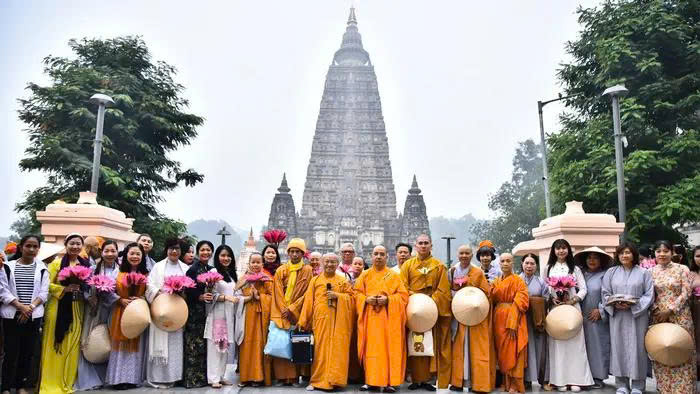
Bodh Gaya, located in the state of Bihar, India, is where the Buddha attained enlightenment under the Bodhi tree. After years of ascetic practice, he decided to meditate under a pipala tree, beside the Niranjana River, and vowed not to leave until he achieved enlightenment. After 49 days of meditation, he attained enlightenment and became the Buddha.
Bodh Gaya is also a top tourist destination in Asia today. It attracts millions of pilgrims because of the Bodhi Tree, where the Buddha attained enlightenment. Some impressive relics include the Vajrasana (Diamond Throne), the Mahabodhi statue, and the Mahabodhi Temple.
3. Sarnath (Deer Park)
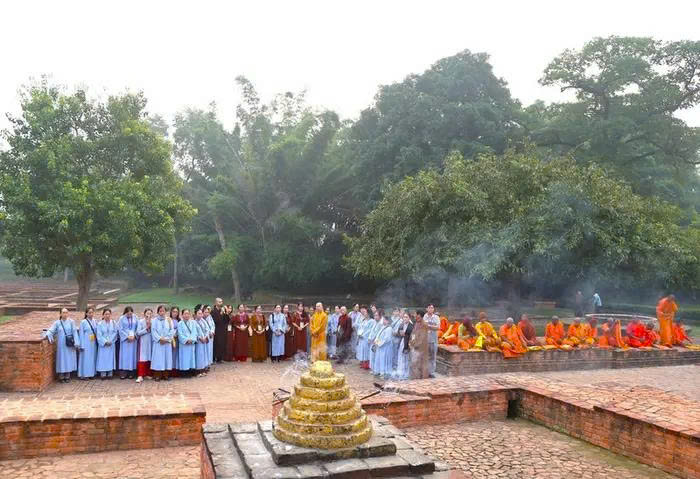
After attaining enlightenment, the Buddha chose Sarnath – the Deer Park – as the place to deliver his first sermon to the five ascetics, including Kaundinya. Furthermore, this place is also associated with the story of the sixty monks who traveled throughout the land to preach the Dharma and subsequently attained Arhatship.
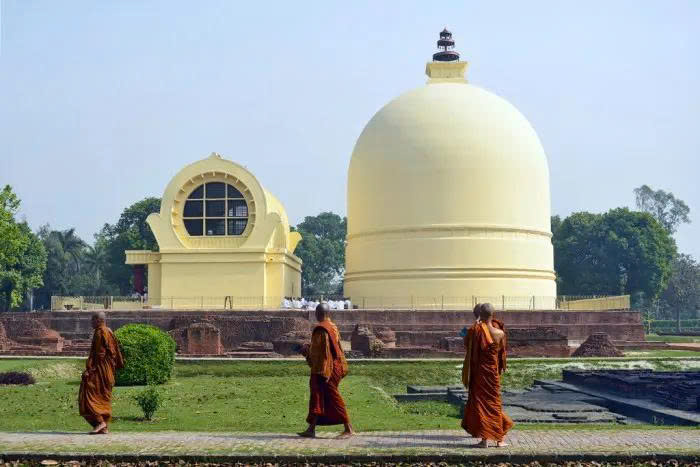
Today, the Sarnath site still contains the remains of the Dhamekh stupa, the Dharmarajika stupa, the Chaukhandi stupa, the Mulagandhakuti monastery, the Ashoka pillar, and a Bodhi tree branched from the original Bodhi tree. The Sarnath pilgrimage center is located about 10 km from Varanasi, India.
4. Kushinagar
Kushinagar, located in Uttar Pradesh, India, is the site of the Buddha's Parinirvana (death). According to legend, after completing his teaching duties, the Buddha chose Kushinagar as his final resting place at the age of 80. He was laid to rest between two Sala trees, where he delivered his last sermon to his disciples before leaving this world. This location was chosen by the Buddha's followers as a final farewell place for him. It has become a sacred site for many Buddhist devotees to visit.
Excavations have revealed thousands of monasteries and stupas dating from the 3rd to 5th centuries. Some notable relics include the Mahaparinirvana Pagoda, the site of the Buddha's death, and the Nirvana stupa where the Buddha's body was cremated. Today, Kushinagar is a small town in Bihar, India, with a population of approximately 25,000.
5. Savatthi (Savatthi City)
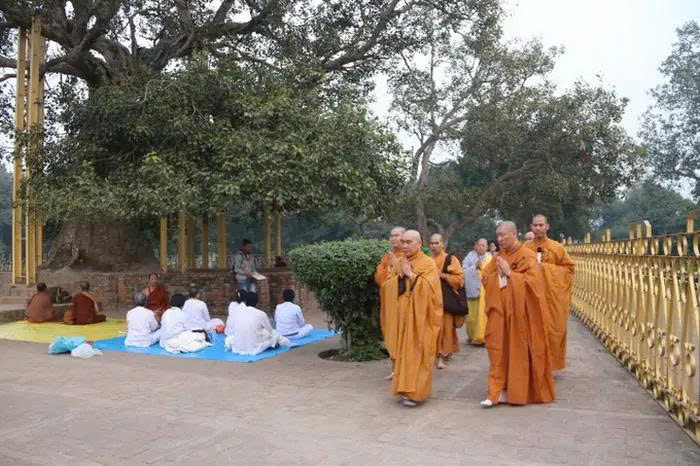
Savatthi, also known as Shravasti, was the capital of the ancient Kosala kingdom. Today, it is located in two large villages, Sahet and Mahet, on the banks of the Rapti River in the border region between the Gonda and Bahraich districts of Uttar Pradesh, northern India, about 12 miles west of Balrampur. It is 170 km from Lucknow, the capital of Uttar Pradesh, and 29 km from Palrampur.
During his approximately 45 years of teaching and guiding sentient beings, the Buddha spent 24 rainy seasons in Savatthi, and 19 of those seasons at Jetavana Monastery alone. This demonstrates the immense importance and influence of Savatthi in the development of Buddhism.