For a long time, pilgrimage to India has been a significant part of the spiritual lives of many people. They travel to holy lands to offer prayers and relieve their burdens. If you are also planning a pilgrimage to this country, don't miss the following tips!
1. What is pilgrimage tourism? The significance of pilgrimage tourism.
Pilgrimage tourism is a type of religious and spiritual tourism. In this type of tourism, pilgrims undertake a journey not simply to visit religious sites and artifacts, but for religious or spiritual purposes, aiming to achieve certain values in their religious practice.
Every year, during the spring, many people make pilgrimages to various cities or countries for religious purposes. Pilgrimage has ancient origins and is considered a precursor to modern tourism.
Through pilgrimage, people seek to relieve stress and pressure in their lives. At the same time, pilgrims wish to pay respects, offer prayers, and purify themselves, "healing" their souls and minds.
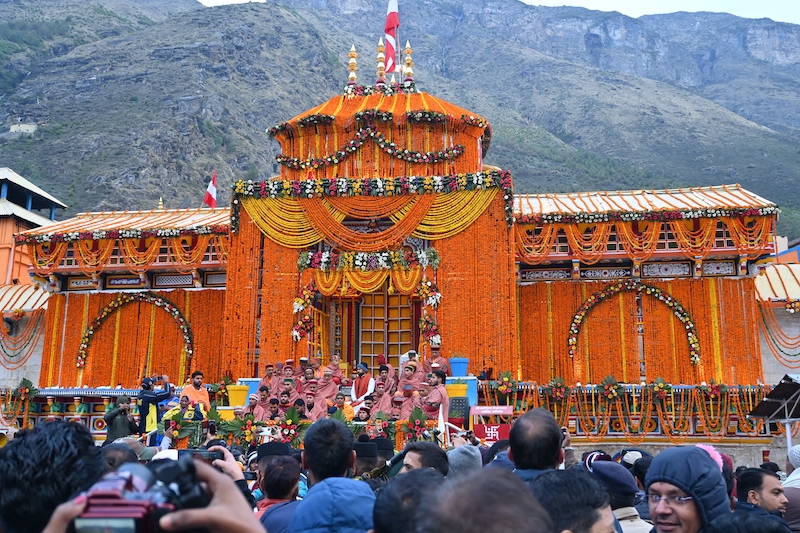
Pilgrimage tourism, or upscale tourism, is currently attracting a lot of interest and attention..
2. Why should you choose India for a pilgrimage trip?
India is the birthplace of many of the world's major religions. To express their religious beliefs, the people here have built numerous famous structures to serve their faith. For this reason, people from all over the world choose India as the starting point for spiritual tourism. In fact, the largest group of tourists to India has always been pilgrims from many countries around the world.
3. Indian Pilgrimage Tour to the Four Sacred Sites of Buddha
The Four Sacred Sites is the collective name for four locations marking four significant events in the life of the Buddha. These sites are also the most popular pilgrimage destinations, as many believe they receive unseen assistance when they visit them.
3.1. Lumbini (Lumbini Garden) - The birthplace of Buddha
The Lumbini Royal Gardens are located in the Terai plains of southern Nepal, bordering India and only about 30km away.
Currently, the site has been enclosed to prevent erosion and damage. Inside the complex are the Shakya pool, the temple of Queen Maya Devi, and the Ashoka pillar made of sandstone. There is also a vihara (monastery). Lumbini Gardens has been recognized by UNESCO as a World Heritage Site.
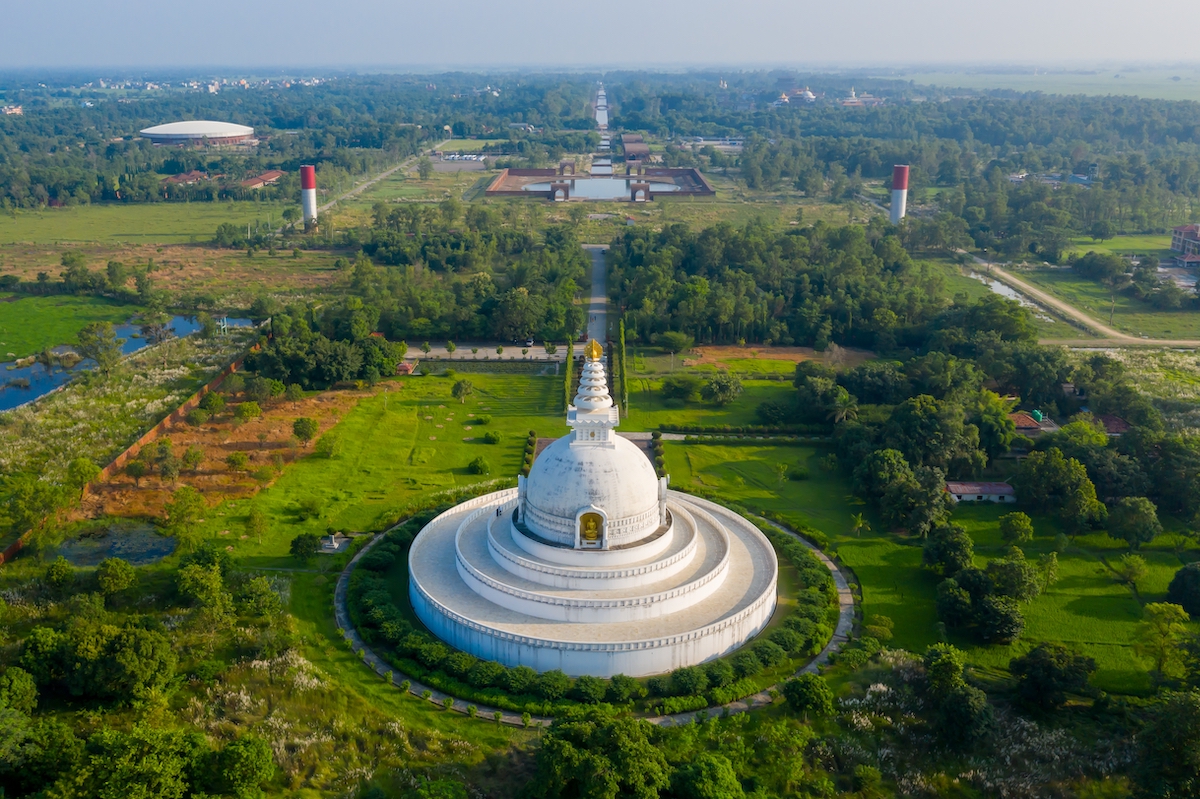
Hành trình Tứ Động Tâm bắt đầu từ Lumbini, nơi Đức Phật ra đời.
3.2. Bodh Gaya - The place where the Buddha attained enlightenment.
Continuing the journey through the Four Sacred Sites is Bodh Gaya, the most important place in the life of the Buddha. Bodh Gaya is also a top tourist destination in Asia today.
The Bodh Gaya complex is located in a small town in the southeastern part of Bihar state, India. This site attracts millions of pilgrims because it contains the Bodhi Tree, where the Buddha attained enlightenment. Some impressive relics here include: the Vajrasana (Diamond Throne), the Mahabodhi statue, and the Mahabodhi Temple.
3.3. Sarnath (Deer Park) - The place where the Buddha delivered his first sermon.
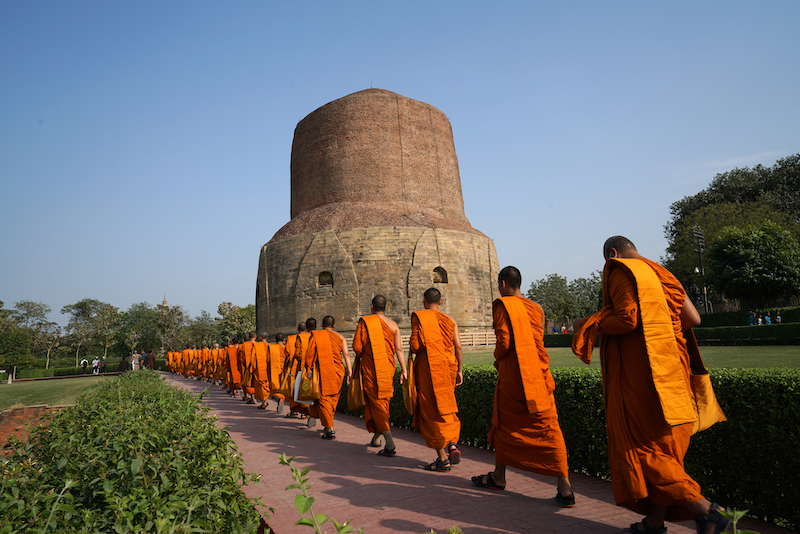
The Sarnath pilgrimage center is located about 10 km from the city of Varanasi, India.
After attaining enlightenment, the Buddha chose Sarnath – the Deer Park – as the place to deliver his first sermon to the five ascetics, including Kaundinya. Furthermore, this place is also associated with the story of sixty monks who traveled throughout the land to preach the Dharma and subsequently attained Arhatship.
Today, the Sarnath site still contains the remains of the Dhamekh stupa, the Dharmarajika stupa, the Chaukhandi stupa, the Mulagandhakuti monastery, the Ashoka pillar, and a Bodhi tree branched from the original Bodhi tree.
3.4. Kushinagar - The place where the Buddha attained Nirvana
The final leg of the Four Sacred Sites is Kushinagara. This was chosen by the Buddha as the place where his disciples would bid him farewell in his final moments.
It has become a sacred site for many Buddhist devotees to visit. Excavations have revealed thousands of monasteries and stupas dating from the 3rd to 5th centuries in Kushinagara. Some notable relics include the Mahaparinirvana Pagoda, the site of the Buddha's death, and the Nirvana stupa, where the Buddha's body was cremated.

Ngày nay Câu Thi Na là một thị trấn nhỏ thuộc bang Bihar, Ấn Độ, có khoảng hơn 25.000 người sinh sống.
4. What should I keep in mind when traveling to India, the land of Buddhism?
Pilgrimage tourism differs somewhat from regular sightseeing trips, especially when traveling in India, a land of Buddhism with diverse cultures and religions. Keep these points in mind to ensure your journey is as smooth and fulfilling as possible:
-
Avoid peak hours from 9 am to 12 pm, as this is when there are many tourists and traffic congestion is likely. The best time to visit temples and pagodas is usually in the early afternoon.
-
Pilgrimage trips will involve a lot of traveling and movement. The weather at pilgrimage sites will also vary. Besides maintaining good health, you should bring some common medications, vitamins, or supplements.
-
Choose appropriate clothing for the pilgrimage. Prioritize clothing that is suitable for local customs, comfortable, and breathable. Bring shoes, hats, and other accessories to protect yourself from the sun and rain.
-
Plan carefully and choose between traveling independently or joining a tour. If you lack experience or time to prepare everything, consider choosing a professional travel company.
-
Be vigilant and carefully protect your belongings and valuables. Avoid wearing valuable jewelry or carrying valuable possessions as they can attract criminals.
-
Book your flight tickets 3-5 months in advance to get the best prices. Currently, Vietjet offers many direct flights from Vietnam to India at very good prices, making your trip to the "Land of Buddha" more economical.